
Brush Piles and Windrows
Brush piles and windrows are commonly used to burn woody debris from land cleared for agricultural and development purposes.
Preparing the site
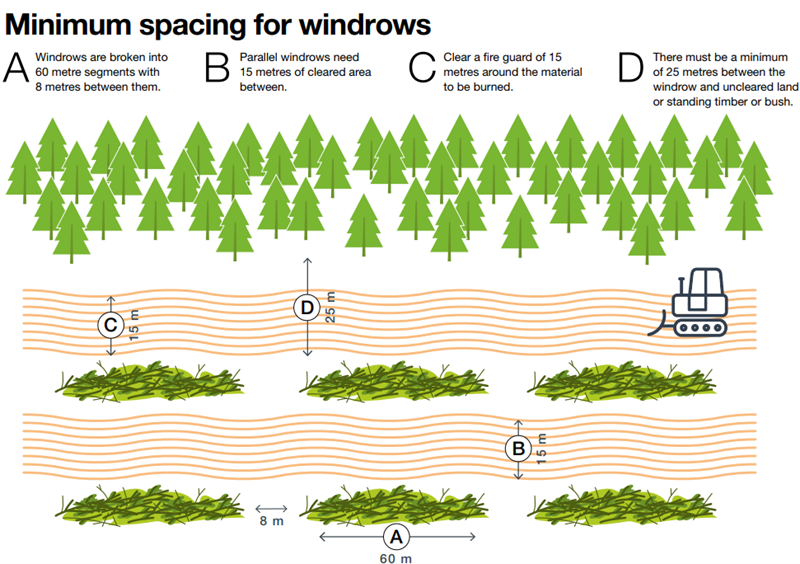
- Brush piles and windrows must be at least 25 metres from trees and bushes.
- A fireguard 15 metres wide and cleared down to the mineral soil must completely surround the area.
- Windrows cannot be more than 60 metres in length with a minimum eight metre break between each window.
- Windrows and brush piles cannot be more than 6 metres wide.
- Parallel windrows must be separated by at least 15 metres.
- To allow for a cleaner burn, ensure that you reduce the amount of soil and dirt in your windrows or brush piles. clean burning reduces the likelihood of smoke issues and smouldering fires. A smouldering fire can last for months and emerge as a wildfire in warm, dry weather.
Safe burning practices
- Never leave your fire unattended
- Only burn what you can control and follow the conditions of your permit.
- Have your fire permit ready to present if requested.
- When burning in windy conditions, watch for sparks and burning material that may result in smaller fires. Larger fires can send these sparks over several kilometres, especially when burning in the wind.
- If the wind is gusting over 15 km/h or increases beyond the limit on your permit, immediately extinguish your fire.
- Have the tools and equipment listed in your permit available to put out any spot fires that may occur.
After you burn
- Spread or stir the debris to extinguish the fire faster.
- Re-pile unburnt debris to ensure it burns as needed.
- Walk through the area and check for heat. Fire can smoulder underground only to reappear under drier conditions as a wildfire.
- Insert a metal probe into the burned area and then feel it for heat to ensure nothing is burning in the ground.
- Water down and extinguish hot spots.
- Carefully inspect the area in the days and weeks after your burn is complete.
- Extinguish any areas still burning and ensure that they are cool to the touch.